
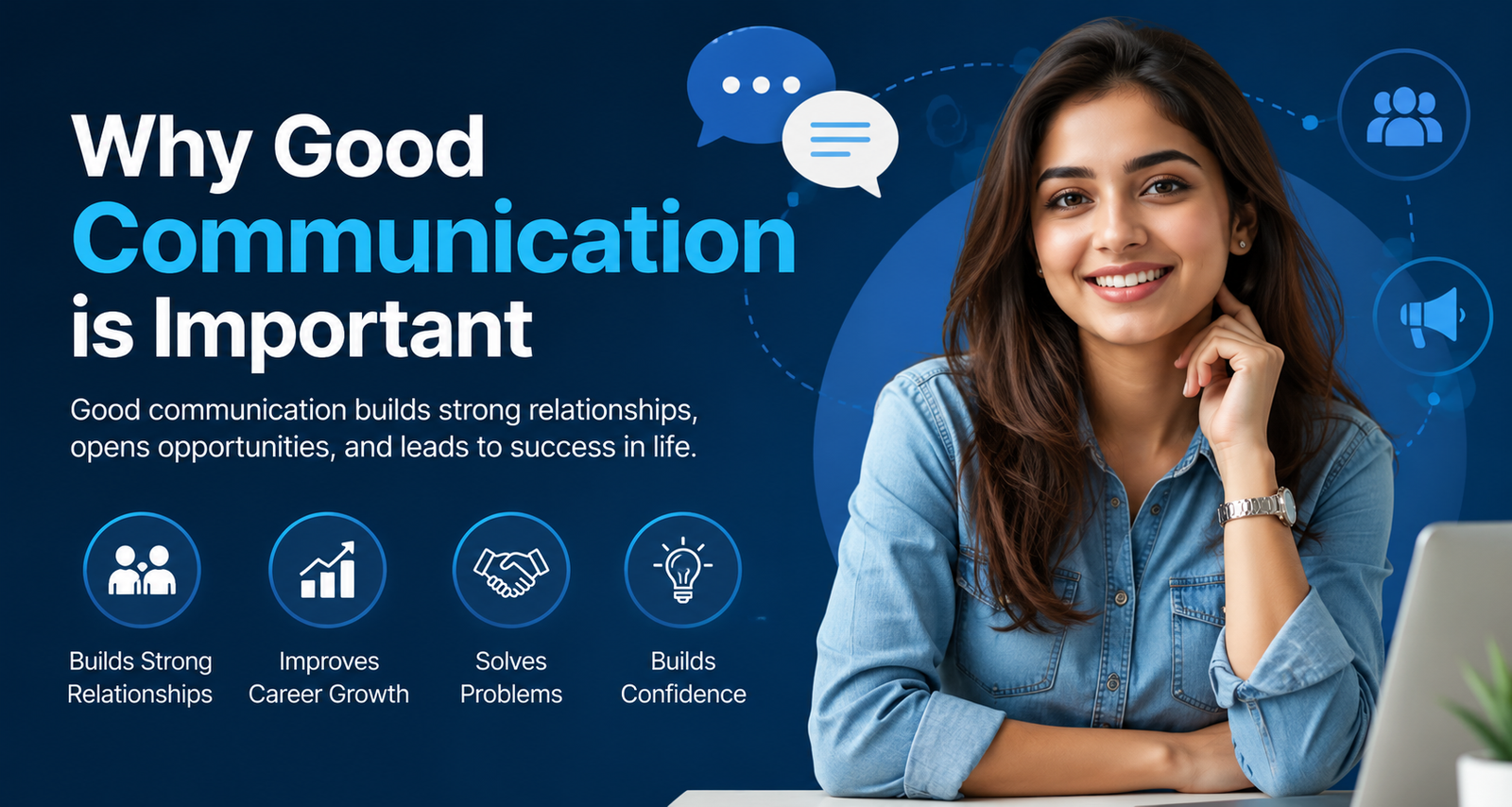
Why Good Communication Is Important
A complete guide to mastering communication skills for everyday life, school, and success.
Table of Contents
- What Is Communication?
- Learning from a Young Age
- Speaking Politely and Kind Manners
- The Importance of Good Listening
- Communication in School and Friendships
- Body Language and Technology
- Learning English and Overcoming Mistakes
- Ways to Improve Communication
- The Role of Parents and Teachers
- Conclusion
What Is Communication?
Communication is a part of our everyday life. We use it when we talk to our parents, friends, teachers, and classmates. We also communicate when we write a message, answer a question, or even smile at someone. Good communication helps us understand other people and lets them understand us.
Children start learning communication from a very young age. Before they can speak, they use their hands, facial expressions, and actions to show what they want. As they grow older, they learn new words, make sentences, and share their thoughts. Communication becomes stronger with practice, just like riding a bicycle or learning to swim.
Speaking Politely Is Very Important
Speaking politely is very important. When we use kind words like "please," "thank you," "sorry," and "excuse me," people feel respected and happy. Good manners make conversations friendly and enjoyable. A kind voice can make someone smile, while rude words can hurt someone's feelings. That is why we should always choose our words carefully.
"Please help me with this homework."
"Thank you so much for your kindness!"
"I am sorry for making a mistake."
"Excuse me, may I speak now?"
Listening Is Just as Important as Speaking
Listening is just as important as speaking. A good listener does not interrupt others. Instead, they listen carefully and wait for their turn to speak. Listening helps us learn new things and understand other people's ideas. It also shows that we care about what others are saying.
Communication in School
Communication is very useful in school. Students ask questions, answer their teachers, work in groups, and give presentations. When students speak confidently, they learn more and make new friends. Teachers also communicate with students to explain lessons and encourage them to do their best.
Friends Need Good Communication Too
Friends need good communication too. Good friends share their ideas, help each other, and solve problems by talking calmly. If friends have a disagreement, they should talk politely instead of arguing. Honest and respectful communication makes friendships stronger.
Body Language and Technology
Body language is another way we communicate. A smile, a wave, or eye contact can send a message without using words. Standing confidently and looking at the person who is speaking shows respect. Our actions often tell people how we feel.
Today, many children use technology to communicate. They send messages, join online classes, or talk to family members through video calls. Technology is helpful, but children should also spend time talking face to face with family and friends. Real conversations help improve speaking and listening skills.
Learning English Communication Takes Time
Learning English communication takes time. No one becomes fluent in one day. Every new word, every sentence, and every conversation helps us improve. Making mistakes is normal. Mistakes help us learn and become better speakers. We should never be afraid to try.
There Are Many Ways to Improve Communication
- Reading storybooks teaches new vocabulary.
- Listening to English songs and stories improves listening skills.
- Speaking English every day, even for a few minutes, builds confidence.
- Writing short paragraphs or keeping a diary also helps students express their ideas clearly.
Good Communication Is Useful Everywhere
Good communication is useful everywhere. It helps us at school, at home, and later in our jobs. People who communicate well can make friends easily, solve problems, and work with others successfully. Communication also teaches us to respect different opinions and understand people from different cultures.
The Role of Parents and Teachers
Parents and teachers play an important role in helping children become good communicators. They encourage children to ask questions, share ideas, and speak with confidence. They also teach children to be kind, patient, and respectful while talking to others.
Every Child Can Become a Good Communicator
Every child can become a good communicator. It does not matter if you are shy or nervous. The important thing is to keep practicing every day. Speak clearly, listen carefully, ask questions, and never stop learning. With time and practice, your confidence will grow.
Conclusion
In conclusion, communication is one of the most important life skills. It helps us make friends, learn new things, solve problems, and express our feelings. Good communication makes school more enjoyable and prepares us for a bright future. If we practice speaking, listening, reading, and writing every day, we will become better communicators and more confident people.
Greetings & Introductions
In this lesson, you'll learn how to greet people politely, introduce yourself confidently, ask someone's name and begin simple everyday English conversations.
Duration
Approximately 10 Minutes
Lesson Goal
Learn to greet people and introduce yourself naturally.
Skill Focus
Speaking & Everyday Communication
Real-Life Use
School, workplace, travel and meeting new people.