
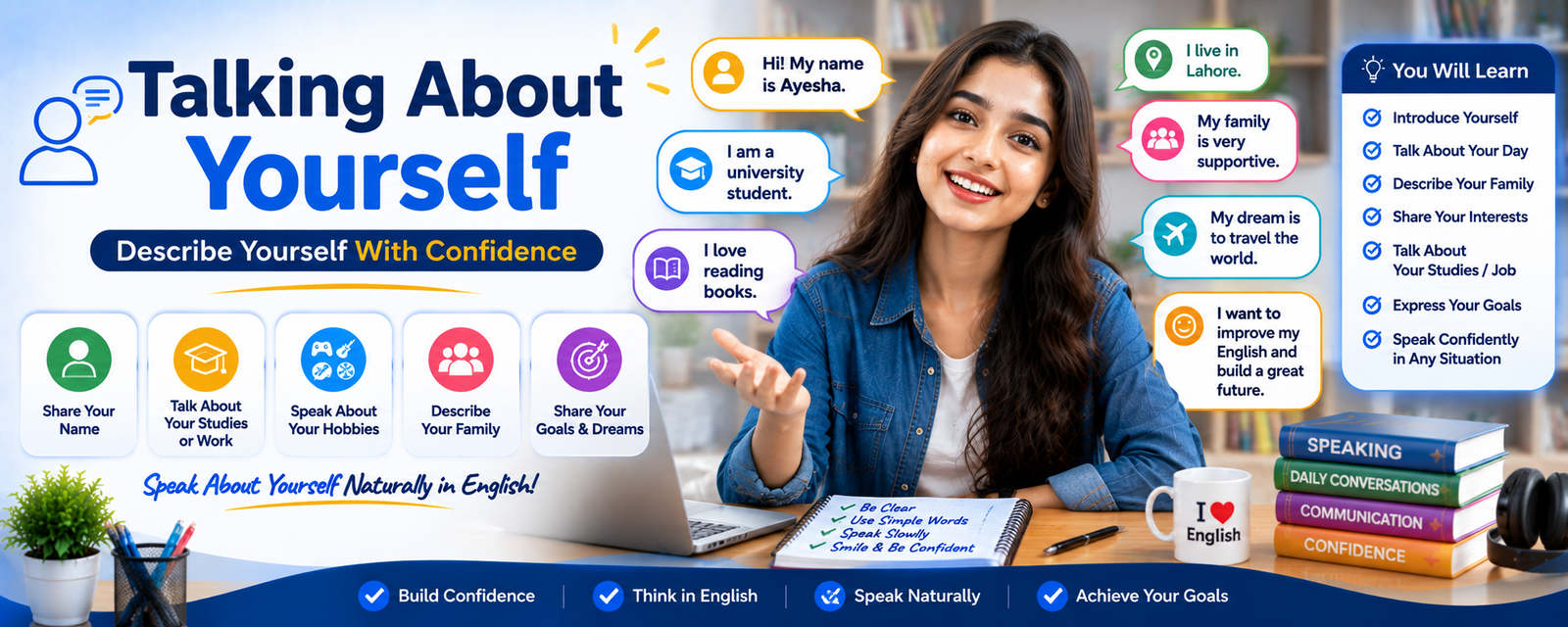
Introducing Yourself with Absolute Confidence
Master the art of introducing yourself clearly, confidently, professionally, and naturally in any situation.
Masterclass Introduction
Introducing yourself is one of the most powerful communicative acts you will ever perform. Whether you are stepping into a high-stakes job interview, networking at an industry conference, meeting a new academic cohort, or introducing yourself on a public stage, your self-introduction sets the psychological tone for all future interactions.
True confidence in self-presentation is not about arrogance; it is about self-awareness, clarity, poise, and the deliberate management of how you wish the world to perceive your value.
Phase 1: The Psychology of Confident Self-Presentation
Before diving into words and scripts, you must master the internal and external mechanics of confidence.
Internal Alignment (Mindset)
Confidence stems from certainty. When you introduce yourself, you are not begging for approval or auditioning for worthiness; you are simply offering a clear window into who you are, what you do, and how you can add value.
Instead of thinking: "I hope they like me."
Shift your mindset to: "I am excited to share my perspective and see how we can collaborate."
External Delivery (Non-Verbal Communication)
Posture
Stand or sit with an open chest, shoulders relaxed, and spine straight. Good posture physically stimulates testosterone production and reduces cortisol, making you feel naturally more secure.
Eye Contact
Maintain steady, warm eye contact. It signals honesty, engagement, and emotional stability.
Voice Modulation
Speak from your diaphragm rather than your throat. Project your voice clearly, control your pacing, do not rush, and use strategic pauses to let important points sink in.
Phase 2: The Core Framework of a Powerful Introduction
A brilliant self-introduction is structured, concise, and adaptable. It follows a logical arc that guides the listener effortlessly through your identity.
Hook & Name
Start with a warm, commanding greeting and state your name clearly.
Core Identity
Define who you are professionally, academically, or personally in one impactful sentence.
Value & Expertise
Highlight your key skills, accomplishments, or specialization.
Passion & Vision
Inject personality and explain what drives you.
Engaging Close
Tailor the ending to the situation and invite further conversation.
Remember: Avoid listing every job you have ever had. Focus on the highlights that matter right now and make your introduction relevant to your audience.
Phase 3: Comprehensive Templates for Different Scenarios
Different situations require different tones. Below are fully expanded templates designed for professional, casual, and formal academic or public speaking environments.
1. Professional Job Interview or Corporate Networking
Use this when you want to establish authority, competence, and career trajectory.
2. Casual or Social Gathering
Use this when you want to be approachable, warm, engaging, and memorable.
3. Academic, Workshop, or Public Speaking
Use this when establishing expertise, thought leadership, or academic background.
Phase 4: Advanced Vocabulary and Phrasing for Maximum Impact
To elevate your self-introduction from ordinary to extraordinary, replace weak, passive verbs with strong, active vocabulary.
| Weak / Common Phrases | Powerful / Confident Alternatives |
|---|---|
| "I am good at working with people." | "I specialize in fostering high-performance cross-functional collaboration." |
| "I worked on a project that made money." | "I spearheaded initiatives that generated substantial revenue growth." |
| "I know a lot about this topic." | "I bring deep domain expertise and strategic insight to this field." |
| "I want to help the team." | "I am eager to contribute my technical acumen and drive collective success." |
| "I like fixing problems." | "I thrive on untangling complex challenges and designing streamlined solutions." |
Phase 5: Common Pitfalls to Avoid
Even highly capable individuals make tactical errors when introducing themselves. Keep these guardrails in mind.
The Resume Recitation Trap
Do not recite your entire life story chronological-style from high school onward. Keep your narrative curated and focused entirely on the present context.
False Humility
Do not undermine your achievements with dismissive qualifiers like "I'm just a beginner, but..." or "I guess I did okay on that project." Own your successes with quiet dignity.
Monotone Delivery
Even the most impressive script will fall flat if spoken like a robot. Inject natural inflection, warmth, and genuine human curiosity into your voice.
Rambling
Respect your listeners' time. A powerful introduction is disciplined, hitting its marks efficiently and leaving the audience wanting to know more rather than checking their watches.
Phase 6: Actionable Exercise for Mastery
To truly internalize confident self-presentation, use this three-step practice drill.
Draft Your Anchor Script
Write out a 60-second version of your introduction using the core framework.
Record and Review
Record a video of yourself speaking the script on your smartphone. Watch it once with the sound off to check your body language, posture, and facial expressions.
Watch it a second time with the sound on to evaluate your pacing, tone, and filler words such as "um" or "like".
Refine and Iterate
Cut out any unnecessary fluff until your delivery is crisp, resonant, and natural.
Practice it daily until you can deliver it effortlessly without notes.
Build Your Confidence Through Practice
The goal is not to memorize every word. The goal is to understand your structure, communicate your value clearly, and deliver your introduction naturally and confidently.