

From Beginner to Confident Speaker: English Grammar Made Easy
**Short Description:** Improve your English speaking skills with simple grammar tips, practical exercises, and confidence-building techniques. Learn how to communicate clearly, avoid common mistakes, and become a fluent English speaker step by step.
6/17/2026
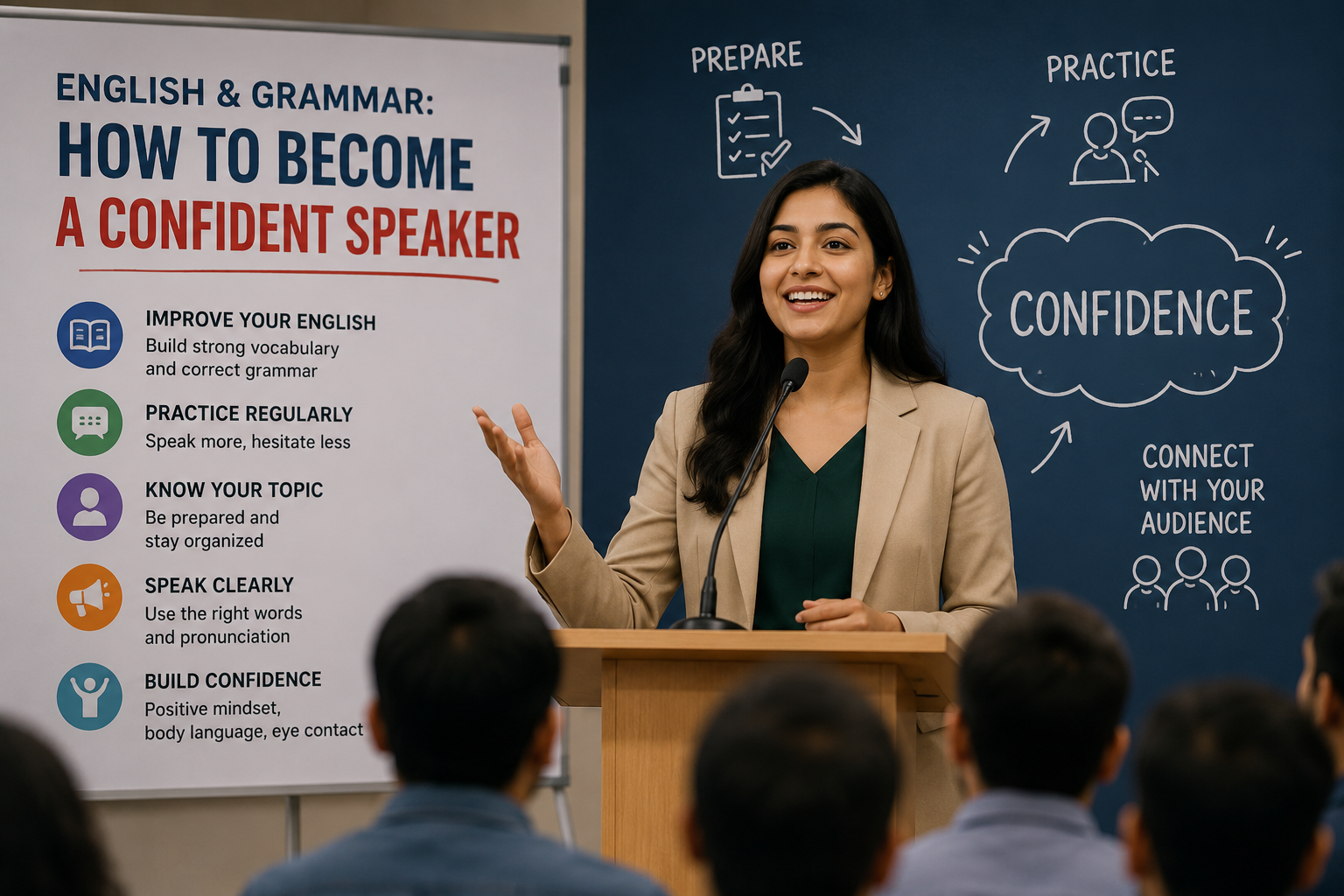
Speaking English & Grammar: How to Become a Confident Speaker
Now ask yourself the following question. Have there been moments when you knew exactly what you wanted to say in English, but the minute you started to speak, words simply escaped your lips? You got stuck. You may have blabbered some stuff or used a completely incorrect construction, feeling embarrassed right after that or decided to keep quiet and not say anything meaningful because of that.
These situations may occur to many people. However, the problem usually lies not in the fact that you are not clever or experienced enough. In most cases, it is associated with the lack of proper practice, i.e., connecting English grammar with speaking.
This article is focused on the relationship between these elements of English studies and how mastering both of them simultaneously contributes to successful learning results.
Let’s be real for a second. How many times have you thought, “I know exactly what I want to say in English,” only for the words to disappear or come out tangled the second you start talking? Maybe you froze up. Or you said something that sounded off and felt embarrassed about it afterward. Maybe you just stayed quiet, even when you actually had something useful to say.
If that sounds familiar, trust me ,you’re in good company. Millions of people deal with this all the time. And here's something people rarely admit: It’s not about intelligence. It usually comes down to the kind of practice you’re getting. It’s all about connecting the grammar you learn with the way people actually speak.
That’s what I want to talk about here how speaking English and understanding grammar shouldn’t live in different worlds. When they finally work together, that’s when things really click. You start to sound clear, comfortable, and sure of yourself.
Why does speaking English feel so different?
A lot of us learn English from books. We memorize rules, complete exercises, and pass tests. Then, suddenly, we have to join a real conversation and none of it feels the same.
Talking is just a whole different game from writing. Writing gives you time to pause and think. You can rewrite, check, and second-guess yourself as much as you want. But when you’re talking, everything happens at once. You’re listening, thinking, and responding plus worrying about how you sound and if people understand you.
And then there’s the rhythm. Spoken English moves. There’s tone, emotion, and even the way you say something can flip its whole meaning. Take “You did this?” that’s a whole range of reactions, depending on your voice. You won’t find that in a grammar book. That’s in your delivery.
So yeah, spoken English is trickier. But honestly, when you get it right, it feels more alive and personal than anything you write down.
Grammar isn’t the problem, bad grammar teaching is
Here’s the twist: grammar itself isn’t what makes you sound awkward. It’s usually the way we’re taught grammar long, rigid lists of rules you’re not supposed to break.
But in the real world, native speakers break these rules all the time. “Who did you go with?” is what people actually say not “With whom did you go?” And you’ll hear “I’m gonna call him later” way more than “I am going to call him later.” Sometimes, people answer with a single word, and it’s totally fine.
But grammar still matters. What’s important when you’re speaking is using grammar in a way that gets your meaning across, not just reciting the rules. Think of grammar as a map helpful, but you don’t need to memorize every little side street.
People who speak really naturally have absorbed grammar through use, not just by memorizing charts and tables. That’s where you want to get.
Key grammar bits you actually need
Nobody expects you to master every single detail of English grammar to speak well. But there are a few areas that really change how clear and confident you sound.
Tenses are a big deal. They let people know when something happened, is happening, or will happen. Mixing them up like saying “I am knowing him since five years” instead of “I have known him for five years” is one of the first things people notice. The good news? You only need a few tenses to handle most everyday situations: simple present, simple past, present perfect, present continuous, and the basics of the future tense.
Subject-verb agreement sounds complicated, but it’s not that bad. The verb just needs to match the subject. “Ayesha goes to school” is right; “Ayesha go to school” isn’t. Sometimes it gets weird, like “The team is playing” or “The team are playing,” but that sorts itself out with practice and listening.
Articles—like “a,” “an,” and “the” are tiny but tricky. If your first language doesn’t use them, they can really make you sweat. Knowing when to say “I saw a dog” versus “I saw the dog” just takes time and exposure. Don’t beat yourself up over it, it’s tough for everyone.
Prepositions will mess with you, because they don’t always make sense. You depend “on” someone, wait “for” them, talk “to” them but you can also talk “about” them. You arrive “at” a station but “in” a city. You can’t reason these out; you just have to pick them up as you go, from hearing and reading a lot of English.
Questions in English can trip up even advanced learners. You need that helper verb and the right word order. “You are coming?” feels normal in some languages, but in English, it sounds off. “Are you coming?” is what you want. The sooner you’re comfortable with that, the smoother your conversations get.
Don’t ignore pronunciation
You can know all the grammar you want, but if people can’t understand you, it won’t get you very far. Pronunciation is more than just your accent; it’s about making the sounds clear enough that your listener doesn’t have to guess.
English is weird that way 44 different sounds, only 26 letters, so spelling is all over the place. Just look at “tough,” “though,” “through,” and “thorough.” Same letters, completely different sounds. It’s confusing for everyone.
Rather than obsessing over spelling, focus on what you hear. Watch movies, listen to podcasts, pay attention to the way people talk. The more you hear, the more you’ll start picking up the patterns, almost without realizing.
One last thing stress matters. In English, it’s not just about the sounds, but where you put the emphasis. “PREsent” is a gift; “preSENT” is what you do in a meeting. Get the stress wrong and you’ll confuse people, or at the very least, make them work harder to follow you. That’s not fair to them or you.
Mistakes Don’t Mean You’ve Failed They’re Just Part of Learning
Honestly, one of the toughest things about learning to speak English is the fear that comes with making mistakes. Teachers correct you in the middle of talking, classmates might laugh, or you get marked down for small slips. After a while, you just stop speaking up because being wrong feels risky.
But that’s not how language works. When you make a mistake, you pick up something real. If someone corrects you in a helpful way, you actually remember the lesson a lot better than anything out of a grammar book. If you say the wrong thing and the other person looks confused, it sticks with you. Mistakes give you clues about what to work on. They're not something to be ashamed of; they're just part of how you get better.
Here’s the stuff that trips up a lot of people: using continuous tenses with verbs that don’t need them like saying “I am understanding” instead of “I understand/“I got it.” Or translating phrases word for word from your own language, which almost always sounds off. And then there’s forgetting little words like “however,” “so,” “because,” or “but.” Those are small, but they really help keep your ideas clear when you speak.
What Actually Works: Real Strategies for Real People
If you want to get better at speaking English, forget about cramming more grammar into your head. Improvement happens when you get out there and use the language. Here’s what actually helps:
Listen like you mean it. Dive into English podcasts, YouTube videos, movies, or TV shows, whatever you actually enjoy. Let the language soak in. Don’t just let the words pass by; pay attention to how people pause, the way their sentences flow, the feelings in their voices.
Read out loud every day. Even just ten minutes makes a difference. Reading aloud isn’t just about the words. it trains your mouth, your breathing, and slowly builds your confidence. Trust me, silent reading just can’t do the same thing.
Talk, even if it feels weird. Find someone to chat with, join a group, or just talk to yourself in the mirror. It’ll be awkward, sure, but nobody ever got fluent by staying comfortable.
Record yourself talking. You’ll probably cringe at first, but that’s normal. You’ll start noticing mistakes and weird habits you never notice while you’re talking, and that’s how you fix them. Jot down new words and phrases. Then push yourself to use them in a real conversation within a day. The words you actually use stick with you. The ones you only see on a page fade away.
Final Thoughts
You don’t have to tackle spoken English and grammar as two separate challenges. They’re just different parts of the same journey, and with every step, things get a little bit easier. Some days, your words will get stuck or your sentences will sound off. Honestly, that happens to everyone every fluent speaker you look up to has been there, fumbling through awkward moments and mistakes. What mattered wasn’t some special gift; it was the choice to keep at it. Speak out loud. Mess up. Laugh it off and learn as you go. Every shaky conversation is helping you grow into the confident, fluent speaker you want to become even if it doesn’t feel like it yet.
MISS KINZA