

Formal and Informal English in Daily Life, Education, and Work
Learn the difference between formal and informal English and discover when to use each style in daily conversations, education, and professional workplaces
6/17/20262 min read
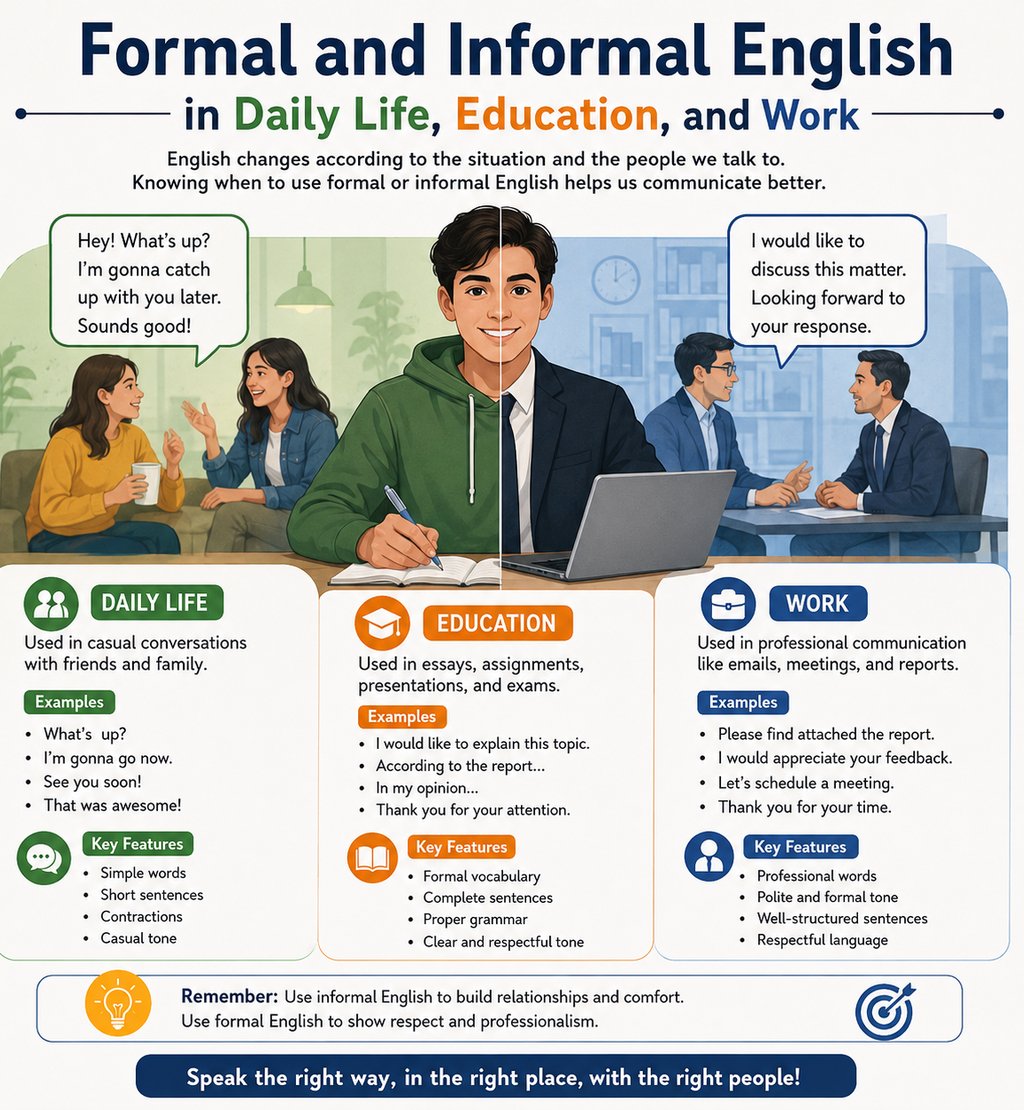
Formal and Informal English in Daily Life, Education, and Work
Learning daily English sentences is an essential part of developing good communication skills. English language is extensively taught in all schools, colleges, and universities throughout the world. Therefore, students need to learn commonly used sentences in order to communicate effectively with their teachers and peers in school, colleges, and universities. Learning daily English sentences helps the learners develop better fluency and speaking skills.
There are numerous benefits to learning simple English sentences on daily basis. For example, students often need to ask questions to the teacher in the classroom. Sentences such as "May I come in?" "I have completed my work," and "I did not understand this topic" are essential for effective classroom communication. It becomes easy for the students to communicate with their teachers through the usage of simple English sentences.
Using daily English sentences is helpful during school conversations as well. Phrases like "Can you help me, please? We should collaborate," and "What is the homework for today?" are helpful for developing good teamwork skills among the learners. Such phrases are helpful for building self-confidence as well.
Another vital aspect where students could make use of the daily English sentences is socialization. The students can use simple greetings and polite sentences such as "Good morning" and "How are you? Thank you" and "You're welcome." Such sentences would make it easier for the students to develop good manners and create a positive atmosphere at both the school and in life. Good manners play an important role in developing skills in English.
One of the other benefits of using daily English sentences is improvement in fluency. The students learn to communicate in fluent English without translating from the mother tongue. They become able to think and communicate quickly. Some of the examples include daily sentences such as "I am feeling tired," "I am going home," and "I will study later."
Another benefit of learning such daily English sentences is that the students become confident. Speaking in English causes fear and shyness for many students; however, practicing simple sentences makes it easier for them to build up confidence. Once they have built up confidence in communicating using simple sentences, then they will be ready to move to complex sentences.
The teachers also often encourage the use of common English sentences during classroom exercises in order to improve the English skills of their students. Exercises like role play, pair activities, and discussion groups allow the students to use the sentences in realistic situations. This makes the process of learning more interesting and effective.
In conclusion, the incorporation of daily English sentences into the daily life of the students is very important for improving their communication skills, confidence level, and fluency. The sentences will help the students communicate with other people in school, socially, and at home. The constant practice of daily English sentences will make them better speakers.