
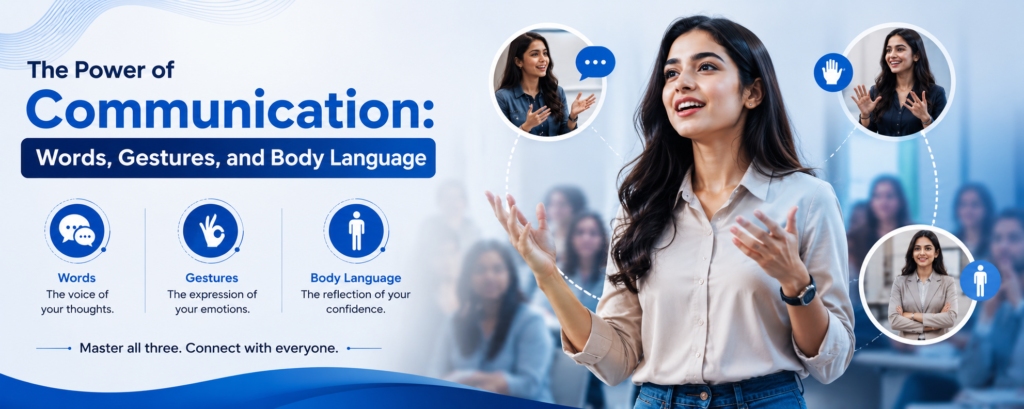
The Power of Communication
Words, Gestures, and Body Language — Unlocking the Skills to Express Ideas Clearly and Build Meaningful Connections.
Communication is a very important part of our daily life. Every day, we talk to our parents, teachers, friends, classmates, and other people. We use communication to share our ideas, feelings, thoughts, and information.
Communication is not only about speaking. We also communicate through our facial expressions, hand movements, eye contact, and body language. There are two main types of communication: verbal communication and non-verbal communication.
What Is Verbal Communication?
Verbal communication means using words to talk to other people. We use it when we ask questions, answer questions, tell stories, give instructions, or share our opinions.
Good verbal communication means speaking clearly and politely. We should use words that other people can understand easily. We should also speak at a suitable speed and use a friendly tone.
Tone of Voice: Our tone of voice is very important. We can say the same words in different ways. For example, “Come here” can sound friendly if we say it politely, but it can sound rude if we say it angrily.
The Importance of Listening
Communication is not only about talking. Listening is also very important.
When someone is talking to us, we should listen carefully. We should not interrupt them again and again. We should pay attention to what they are saying and give a proper response.
Good listening helps us understand other people and avoid misunderstandings.
What Are Gestures?
Gestures are movements of our hands, head, face, or body that can give a message. We often use gestures without speaking.
- Waving your hand: Hello or goodbye.
- Nodding your head: Yes.
- Shaking your head: No.
- Pointing: Shows direction.
- Thumbs-up: Approval or agreement.
- Finger on lips: Be quiet.
These simple movements can sometimes give a clear message without using any words.
Facial Expressions & Eye Contact
Facial Expressions
Our face can show our feelings. When we smile, it usually shows that we are happy or friendly. When we look worried, people may understand that something is bothering us. A surprised face can show that something unexpected has happened.
Example: If a student looks confused when asked a question, the teacher understands that they need help.
Eye Contact
Looking at someone while they speak shows that we are listening and paying attention. Eye contact can also make us look more confident. However, use it naturally—staring too long may make people uncomfortable.
Example: When students give a presentation, making eye contact helps them look and feel confident.
Body Language & The Role of Gestures
Body Language: Body language means the way we use our body while communicating. Our posture, hand movements, facial expressions, and eye contact are all parts of body language.
- Standing straight shows confidence.
- Looking down all the time may make a person look shy or nervous.
- A friendly smile, good posture, natural hand movements, and suitable eye contact create a positive impression.
Why Are Gestures Important? Gestures can make communication easier and more interesting. They help people understand our message better.
Note: Avoid using too many gestures, as excessive movement can become distracting.
Communication in Daily Life
We use verbal communication and gestures everywhere:
- At school: Students talk to their teachers and classmates to learn and share ideas.
- At home: Family members talk to each other to express care, feelings, and daily plans.
- In public places: People use words and hand gestures to ask questions or give directions.
Even when we are silent, our body can still give a message. That is why we should be mindful of our body language at all times.
Conclusion
Communication is much more than just speaking. Our words, voice, gestures, facial expressions, eye contact, and body language all work together to express our complete message.
To become a good communicator, we should speak clearly, listen carefully, use polite words, make suitable eye contact, and use natural gestures.
Remember that communication is a skill. The more we practice speaking, listening, and using positive body language, the better communicators we become.